The most dangerous DeFi transaction is not necessarily the one that fails. It may be the one that succeeds exactly as the smart contract instructed, while the user misunderstood what was being authorized. That counterintuitive distinction explains why a wallet extension should do more than hold keys or display balances. For users considering a Rabby extension download, the important questions are not only how to install a browser wallet, but also how transaction simulation works, what it can reveal, and why cross-chain swaps remain more complex than a single “swap” button suggests.
Rabby’s recent positioning around Ethereum and EVM networks reflects a broader change in wallet design: the wallet is becoming an interpretation layer between a person and a collection of contracts, bridges, decentralized exchanges, and network environments. That layer can make decisions more legible, but it cannot eliminate protocol risk. A useful mental model is simple: simulation can estimate what a transaction is likely to do under current conditions; it cannot certify that the transaction is economically wise, that the destination application is trustworthy, or that a cross-chain route will behave identically after conditions change.
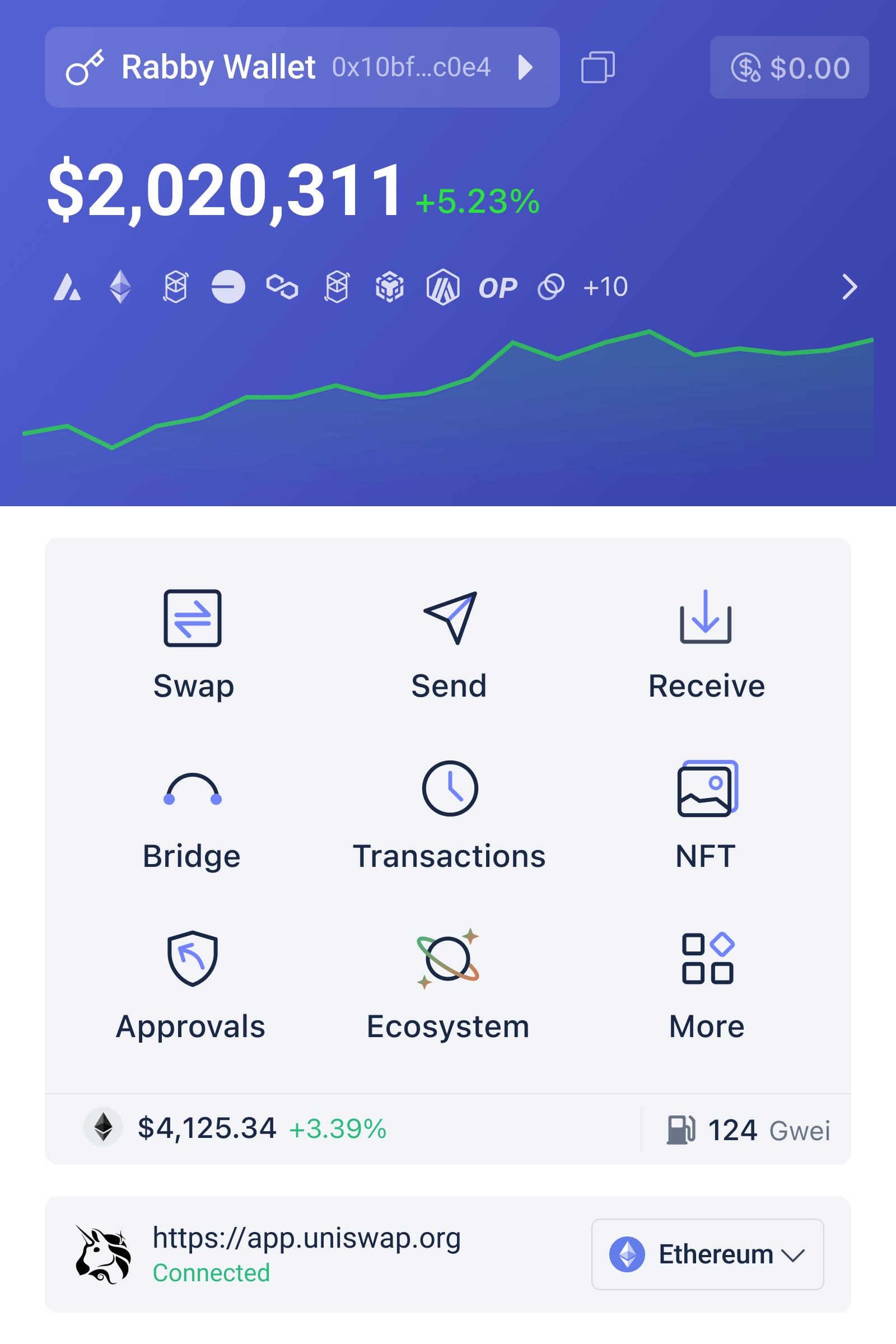
What a browser wallet actually does
A cryptocurrency wallet does not usually “store” coins in the way a physical wallet stores cash. On an EVM network, assets are recorded by smart contracts and account balances are associated with a public address. The wallet controls a private key, or connects to a device that controls one, and uses that key to sign messages and transactions. The network then checks the signature and executes the requested instructions.
This distinction matters during installation. A browser extension is a signing interface and a bridge between a website and a blockchain account. It may request permission to interact with pages, identify the active network, display transaction details, and send signed data to a node or infrastructure provider. A user deciding where to obtain the rabby wallet extension should therefore treat the download step as a security decision, not as a routine software search. A look-alike extension can imitate branding while attempting to capture a recovery phrase or redirect a user toward a fraudulent application.
During setup, the recovery phrase is the central security boundary. It should be generated or entered only inside a trusted wallet environment and never shared through a website, direct message, support form, or screen-sharing session. A legitimate support process should not require it. Users in the United States should also recognize that a wallet interface is not a regulated investment adviser or a guarantee against losses; the technical ability to connect to a protocol says nothing about that protocol’s legal status, solvency, or suitability.
After installation, the safer workflow is to separate three actions that are often treated as one: connecting a wallet, granting a token approval, and executing a financial transaction. Connecting generally allows a site to see a public address and request signatures. An approval can allow a contract to spend a specified token amount later. A swap transfers assets according to contract logic and market conditions. These permissions have different consequences, and a concise button label can conceal the distinction.
Transaction simulation is a forecast, not a guarantee
Transaction simulation typically means executing a proposed transaction against a recent representation of blockchain state without broadcasting it for final inclusion. The wallet or its supporting infrastructure asks: if this transaction were processed now, would it revert, what balances might change, and what contract calls would be involved? This is valuable because many failed or suspicious transactions become easier to identify when their expected effects are shown in advance.
For example, a simulated swap may reveal the input token, the estimated output token, a fee, a router contract, and whether the transaction would likely fail because of insufficient allowance, an expired deadline, or excessive price movement. A simulated approval may show that a contract is requesting permission to spend a token. A simulation can also expose a mismatch between the user’s intention and the actual call path, such as signing a contract interaction that transfers an asset rather than performing a simple exchange.
The first myth to correct is that a successful simulation means a transaction is safe. It does not. Simulation answers a narrower question: whether the proposed call appears executable under a particular state and set of assumptions. It does not prove that the contract is audited, that its administrators are honest, that the received token is valuable, or that the user understands the permission being granted.
There are several reasons for this boundary. Blockchain state changes continuously. A liquidity pool may move between simulation and inclusion. A transaction may be reordered by block producers or affected by other pending transactions. The gas price may change, a route may become less favorable, or a cross-chain message may face a delay. Some contracts also behave differently depending on the caller, block timestamp, block number, or other execution context. A simulation is therefore closer to a conditional forecast than to a laboratory guarantee.
The distinction between technical success and economic success is especially important. A swap can execute without reverting while producing an unexpectedly poor price because slippage protection was loose, liquidity was thin, or the route included substantial fees. Similarly, an approval can execute perfectly while granting a broader allowance than the user intended. “No error” is not equivalent to “good outcome.”
Readers should also understand what simulation may not capture well. It may not fully communicate that a token has transfer restrictions, blacklist functions, rebasing behavior, or a market too illiquid to exit. It may not identify every social-engineering signal on the surrounding website. It may not predict the behavior of a bridge’s off-chain relayers or validators. These are not necessarily failures of the wallet; they are limits of reducing a complex system to a pre-execution call.
A practical review framework
Before signing, examine the transaction in layers. First ask what asset leaves the wallet and what asset should arrive. Next inspect whether the action is an approval, a permit, a swap, a bridge transfer, or a sequence containing several operations. Then consider the spender and destination contracts, the allowance amount, the minimum output, the network fee, and any deadline. Finally, ask whether the transaction still makes sense if the received token falls in value immediately afterward.
This last question is deliberately uncomfortable, but useful. Wallet safety is not only about preventing unauthorized transfers. It is also about preventing authorized misunderstandings. A clear interface can reduce cognitive error, yet the user remains responsible for evaluating the application, token, route, and economic exposure.
Why cross-chain swaps are not ordinary swaps
A conventional swap on one network generally changes the composition of assets within a connected liquidity system. The user sends one token to a smart contract, and that contract releases another token, subject to pricing and execution rules. A cross-chain swap adds a second environment with its own state, fees, confirmation process, and security assumptions.
In practice, a cross-chain route may combine a decentralized exchange, a bridge, an intermediary liquidity provider, or an intent-based system. An “intent” is a description of the desired result rather than a complete sequence of user-specified transactions; a solver or service may then find a way to fulfill it. This can simplify the user experience, but it moves some complexity into a separate execution layer. The route’s convenience should not be mistaken for the absence of trust or operational dependencies.
The mechanism creates an important timing problem. The source-chain transaction can be final or sufficiently confirmed while the destination-chain delivery is still pending. A bridge may need to observe the source event, reach a confirmation threshold, validate a message, and then release or mint an asset on the destination network. If any stage is delayed, the user may see a completed debit without an immediately completed credit. That is not automatically evidence of theft, but it is a different user experience from a single-chain swap.
Cross-chain assets also have a semantic problem. Two tokens with similar names on different networks may not represent the same claim. One may be a native asset, another a wrapped representation, and a third a synthetic or bridged version dependent on an external mechanism. The displayed ticker can be identical while the redemption, liquidity, and counterparty assumptions differ. A wallet can help identify networks and assets, but users still need to determine what they are actually receiving.
The second myth to correct is that adding more supported chains automatically makes a wallet safer or more useful. Breadth can improve access and reduce the need to manage several interfaces, but it also increases the number of contracts, bridges, RPC endpoints, token standards, and failure modes a user must navigate. The relevant measure is not chain count. It is whether the wallet makes the route’s assumptions visible enough for the user to evaluate.
Fees are similarly layered. A cross-chain transaction may involve a source-chain gas fee, a destination-chain execution cost, a bridge or solver fee, and an exchange-rate difference embedded in the route. A route that appears cheaper in one quoted field can be more expensive in total. For a US user comparing a cross-chain trade, the economic calculation may also include recordkeeping complexity: the acquisition, disposal, swap, or receipt of an asset can have tax implications that a wallet interface does not determine. That is a matter for qualified tax advice and accurate transaction records, not for a simulation label.
How to install with a risk-aware workflow
Installation should begin with source verification rather than a search-result click. Confirm that the extension is intended for the browser you use, such as Chrome or Brave, review the publisher information, and examine requested permissions. The goal is not to assume that a familiar name makes every listing safe. It is to reduce the chance that a counterfeit extension enters the signing path.
Once installed, create a new wallet or import an existing one only in the extension’s trusted setup flow. For meaningful balances, a hardware wallet can reduce exposure of the private key by keeping signing operations on a separate device, although it does not protect a user from approving a malicious transaction. The hardware device answers “who signs?” It does not by itself answer “what am I signing?” Transaction interpretation remains essential.
Before moving a large amount, connect to a known application, check the active network, and test with a small value when appropriate. Confirm the destination address and token contract through more than one reliable source. Keep separate browser profiles for ordinary browsing and financial activity if that improves operational discipline. These steps do not make DeFi risk-free; they make mistakes more expensive to commit and easier to notice.
A particularly useful habit is to treat approvals as long-lived permissions rather than one-time fees. If a contract receives an unlimited allowance, the permission may remain relevant after the original swap. Where practical, use a limited allowance, understand whether a permit signature is being requested, and periodically review and revoke permissions that are no longer needed. Revocation itself is an on-chain transaction and therefore carries a network fee, so the choice involves a security benefit, cost, and amount at risk.
What to watch as wallet design develops
Recent messaging that presents Rabby as a wallet for Ethereum and EVM networks points toward a competitive question that is more substantive than branding: can wallets make multi-network activity understandable without hiding the underlying trade-offs? If simulation becomes more context-rich, users may gain better visibility into approvals, route composition, expected balances, and likely failure conditions. That would be meaningful progress if the information remains inspectable rather than being compressed into an overly reassuring score.
The near-term signal to watch is not simply whether more chains or swap routes are added. Watch whether the interface distinguishes simulation confidence from contract trust, separates bridge status from destination settlement, identifies the exact spender, and makes economic details legible. If those elements improve together, wallets could reduce a major source of DeFi loss: the gap between what a user believes a button does and what the underlying transaction actually authorizes. If interfaces prioritize speed while obscuring dependencies, broader access may instead broaden the consequences of misunderstanding.
Frequently Asked Questions
Does transaction simulation prevent a malicious DeFi transaction?
No. Simulation can show expected contract effects and may identify likely failures or unusual transfers, but it cannot prove that a contract is trustworthy or that a transaction is economically sensible. A malicious contract may simulate successfully because its harmful behavior is precisely what the contract was designed to execute. Review the spender, permissions, assets, and application before signing.
Why can a cross-chain swap remain pending after the first transaction succeeds?
Cross-chain routes involve more than one network and may require source confirmation, message validation, relayer or solver activity, and destination execution. The source transaction can therefore be completed while delivery on the destination chain is still pending. Check the route status and destination network rather than immediately repeating the transaction, since duplication can create an additional unintended transfer.
Is installing a wallet extension enough to protect my funds?
No. A reputable extension can improve transaction visibility and signing discipline, but security also depends on the download source, recovery-phrase handling, browser hygiene, contract permissions, application selection, and the user’s review of each transaction. Wallet software is a control surface, not a substitute for evaluating DeFi risk.
The most reliable way to think about a wallet extension is not as a shield between the user and DeFi, but as an instrument panel. It can expose signals, model a proposed action, and organize a complicated route. The driver still has to understand the road, the destination, and the conditions. For transaction simulation and cross-chain swaps, that difference is the line between informed convenience and misplaced confidence.